
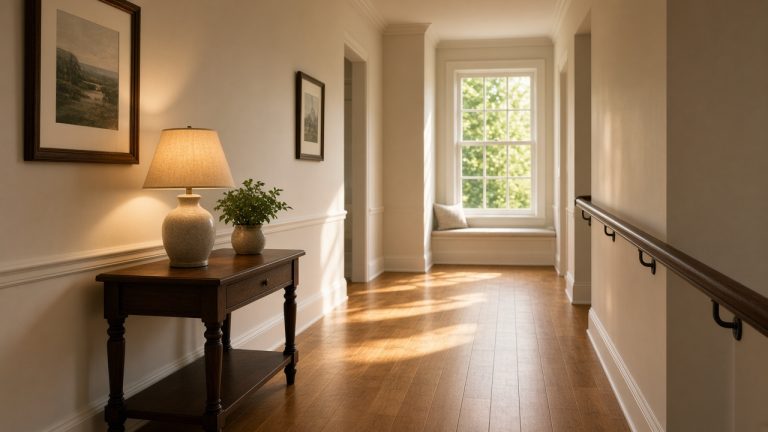
Most homes were not arranged with a wobbly knee or a slower step in mind. They were arranged around busy family life: a basket of laundry on the stairs, a favorite throw rug by the sink, a lamp that has always been on the far side of the room. None of that seemed like a problem for years. Then one day you watch your mother reach for the railing a little harder than she used to, and the whole house starts to look different.
The good news is that a lot of everyday safety comes down to small habits, not big renovations. This post is about those habits. It is household advice from a non-medical home care agency, not a medical fall-prevention program and not physical therapy. If your loved one has had a fall, feels dizzy, or seems newly unsteady, that is a conversation for their doctor.
Start with the floor
Walk the path your loved one uses most, usually bed to bathroom, bathroom to kitchen, and kitchen to a favorite chair. Look down as you go.
- Clear the walkways. Shoes, magazines, pet bowls, grocery bags, and cords tend to drift into the middle of a room. Give them a home along the wall or in a closet.
- Tame the cords. Lamp and phone charger cords that cross a walkway are easy to catch with a toe. Route them behind furniture or along the baseboard.
- Keep stairs empty. Stairs are not a shelf. If things collect there to be carried up later, set a basket at the bottom instead.
- Wipe up spills right away. Water near the sink, tub, or pet dish can make a smooth floor slick.
Rugs: secure them or roll them up
Area rugs are cozy, and many have family history. They can also slide, bunch, or curl at the corners. If a rug stays, make sure it lies flat and does not shift when you step on it. A non-slip pad or rug tape underneath can help. If a small rug keeps creeping or the edge keeps flipping up, it may be kinder to roll it up and store it for now. You can always talk it over together; it is their home and their rug.
Turn up the light
Many older homes in Western Massachusetts have dim hallways, steep cellar stairs, and switches in odd places. Light is one of the simplest things to improve.
- Put a night light in the bedroom, the hall, and the bathroom so a middle-of-the-night trip is not done in the dark.
- Make sure there is a switch or lamp within reach of the bed, so no one crosses a dark room to turn on a light.
- Replace burned-out bulbs promptly, especially over stairs and entryways.
- Keep the porch and front steps lit in the early dark of fall and winter.
Choose sturdy shoes, even indoors
Loose slippers, socks on bare floors, and backless shoes are common at home because they are comfortable. They can also slip or slide off at the wrong moment. Shoes or slippers that stay on the foot, close around the heel, and have a grippy sole are a better everyday choice. If your loved one has foot pain or swelling that makes shoes hard, mention it to their doctor rather than guessing.
Keep everyday things within reach
A lot of risky moments come from reaching. Climbing on a step stool for a mug on the top shelf. Bending low for a pot in the back of a cabinet. Stretching across the bed for the phone.
- Move the dishes, food, and toiletries used every day to shelves between waist and shoulder height.
- Keep the phone, glasses, a water glass, and the TV remote together near a favorite chair.
- Store heavy items low but not on the floor, and light items higher.
- Put a small table or tray by the bed for things needed at night.
The goal is fewer reasons to climb, crouch, or rush.
Make it a habit, not a one-time sweep
Homes drift back to clutter. A quick weekly walk-through, the same path each time, catches new cords, new piles, and the rug that has started to curl. If you visit on Sundays, make it part of the visit. Ask your loved one what feels tricky to them. They often know exactly which step or doorway bothers them.
Where a Haven caregiver fits
Haven of Heart Homecare provides non-medical home care from Holyoke across Hampden, Hampshire, Franklin, and Berkshire counties. Our companion care visits can include light household tasks and keeping things tidy, which naturally supports clear walkways. Caregivers who help with personal care are trained in safe body mechanics and fall prevention, so help with getting up, walking, and moving around the house is done with care.
We do not provide physical therapy, medical assessments, or nursing. What we offer is a steady, attentive presence in the home, someone who notices the cord across the hallway and the bulb that went out, and who is there when an extra hand makes the day easier.
If you would like to talk about support at home, call (413) 288-3839 or visit havenofheart.com/contact.
Haven of Heart Homecare provides non-medical home care only. This article is general household guidance and is not medical advice.